Buie-Buje
Highlights
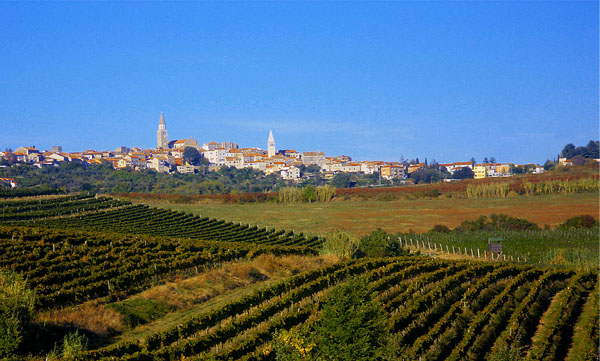
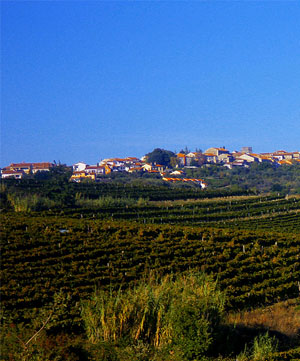
- Vineyards and olive groves
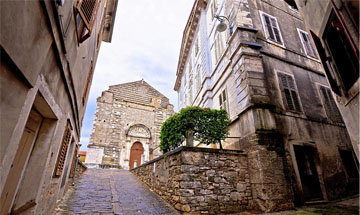
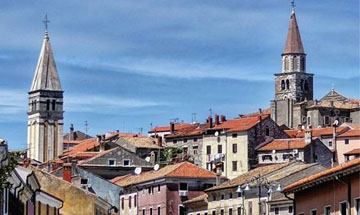
- Old town
- St. Servul Church
... narrates about a rich inhabitant dreamed the Blessed Virgin A.D. 1497. He decided to buy her statue in Venice to give it to church in town Buie. When he came back with the statue, it was late evening and the city door was closed. He spent the night under the stars. Nothing couldn’t disturb his happiness because the statue will be in the church the next day. However, tomorrow he couldn’t lift the statue, even with the help of other inhabitants. Nobody couldn’t lift it, and they concluded that the Blessed Virgin wanted the statue to stay right on that place. So, grateful citizens of Buie built the new church, out of city walls.
The excellent strategic position of the Buie hill attracted the area’s ancient inhabitants as early as the Bronze Age. The origin of these people is unknown. They lived in a fortified, prehistoric settlement on the top of the hill. The remains of some 20 such hill-forts have been uncovered in Buie and its environs. The Histrians, the first documented people of Istria, lived in these hill-forts during the Iron Age.
Histrians inhabited citadels until the arrival of the Romans. During that period, some villages disappeared while others became towns. In addition to archaeological findings, the Roman rule left its traces in the names of villages such as Castelvenere, dedicated to a pagan goddess. After the Fall of Rome in the 5th century, the Ostrogoths came to power and then were replaced by the Byzantines in the 6th century.
The Middle Ages were marked by the intense construction of houses, palaces, towers and walls. In the early 15th century, after a long period of resistance, Buie finally fell under the rule of Venice, which destroyed the city’s walls and towers but built new buildings.
Today, the entire region of Buie-Buje is the most famous winegrowing part of Quatro Terre with numerous wine cellars and farmhouses (agritourism). There are lovely medieval towns in the vicinity; the most famous ones are Grisignana-Groznjan, Momjan and Zavrsje.